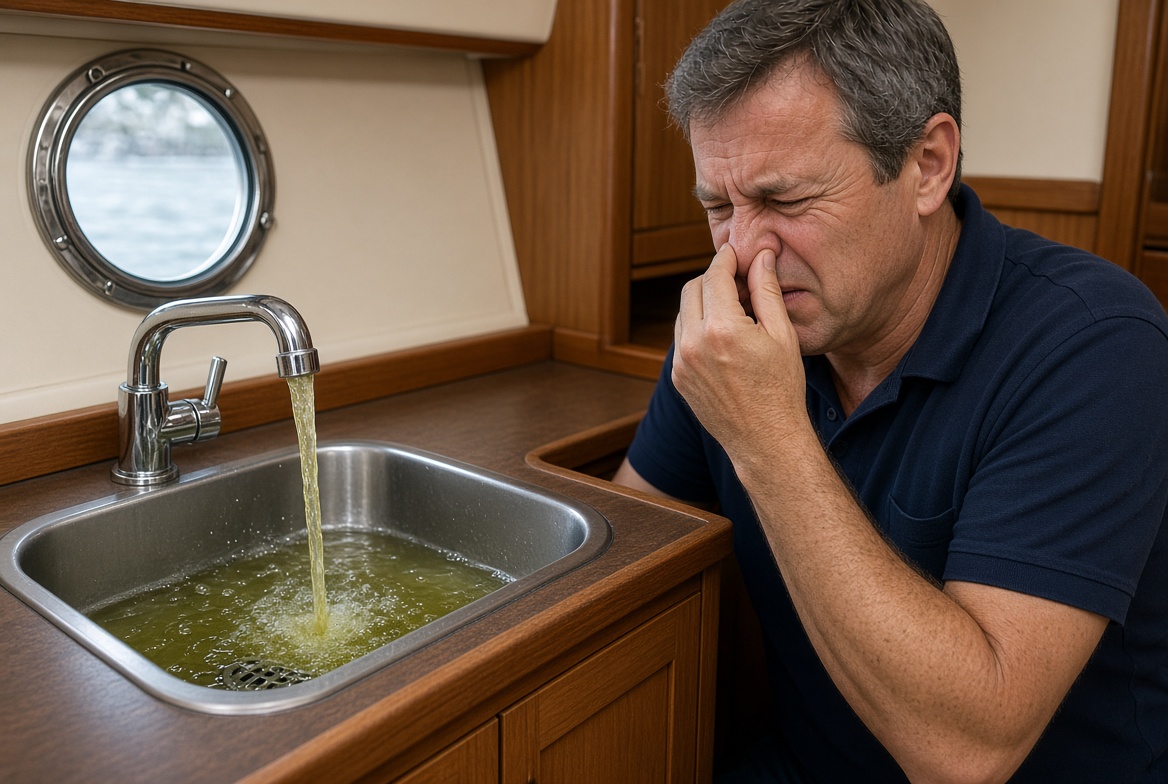
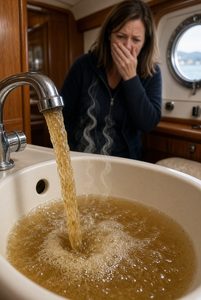
Oh, that smell. Most of us know it the moment it hits. You pull into a new slip, secure the lines, plug in the power, and hook up the hose. Everything feels set for a relaxed stay. Then someone inside turns on the galley faucet and out comes water that looks, smells, or both like it has no business coming out of a tap.
It is easy to assume the marina just does not care about the water supply. In most cases, that is not what is happening. The municipal water that enters the marina is usually fine. The trouble starts after it travels through long dock lines and, especially, the hoses boaters connect to them.
Why dock water goes bad
Dock water lines and the hoses attached to them often sit unused for days or even weeks. Water left standing in those lines quickly grows bacteria and a sticky biofilm. When the tap is finally opened, that material flushes out with the first few gallons. Warm weather speeds the process. Clear or translucent hoses make it worse because light can penetrate and encourage algae growth inside the hose itself.
In low-oxygen conditions, certain bacteria convert sulfates naturally present in the water into hydrogen sulfide gas. That is the classic rotten-egg smell. It can appear even at very low concentrations and is especially common in coastal and marina systems. Once it gets established in the lines, it tends to stay until everything is thoroughly flushed or sanitized.
Old, non-potable, or rarely flushed hoses are frequent culprits. Algae, slime, and bacteria build up inside them and get pushed into the boat’s tanks or used for rinsing. Some marinas have even reported algae growing in their own plastic dock water lines when usage is low. The combination of warm temperatures and infrequent turnover means water that left the street in good condition can degrade noticeably by the time it reaches a distant pedestal.
What this means for your boat
The water coming out of the dock tap is often not the same quality as the water in your house. Filling tanks or using the water directly without first flushing the hose (and ideally filtering it) is one of the most common ways boats end up with bad-tasting or bad-smelling water. Once bacteria get into a boat’s tanks and hoses, the problem can continue long after you leave that marina.
What you can do about it
When we first arrived at our marina five years ago, we ran into this exact issue. I added high-quality water filters to each end of our dock hose—one at the pedestal and one at the boat’s water intake. These filters use a six-step process and do not noticeably reduce flow or pressure. They are available in the marketplace section of www.boatownerhq.com. Click HERE.
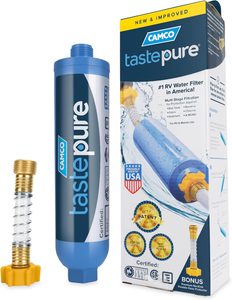
The difference was immediate. No smell, no sediment. We tested the water, and it met drinking-water standards. We still prefer bottled water for drinking and food preparation, but it is reassuring to know the water coming out of the tap is clean.
Filters are one effective step, but they work best alongside a few simple habits:
- Let the dock water run for 30–60 seconds before you fill tanks or use it. This clears the stagnant water sitting in the marina lines and your hose.
- Use a dedicated white, food-grade hose for tank filling. Drain it after each use and store it out of direct sun when possible. Keep a separate hose for washdowns.
- Periodically shock-treat your boat’s freshwater system with a marine-approved sanitizer, especially after a stretch of poor-quality dock water or before a long trip.
- Consider a simple inline pre-filter even if you already use multi-stage filters. It catches larger debris and extends the life of the finer filters.
The bottom line
Foul-smelling or discolored dock water is usually the result of stagnation, biofilm, and bacterial activity in lines and hoses rather than a neglected municipal supply. A little flushing, a clean dedicated hose, occasional system treatment, and good filtration make a noticeable difference. Once those habits are in place, that first turn of the tap becomes far less of a surprise—and a lot more pleasant.
We would love to hear from you. How do you fight nasty water smell on your boat?